How do we test for viruses?
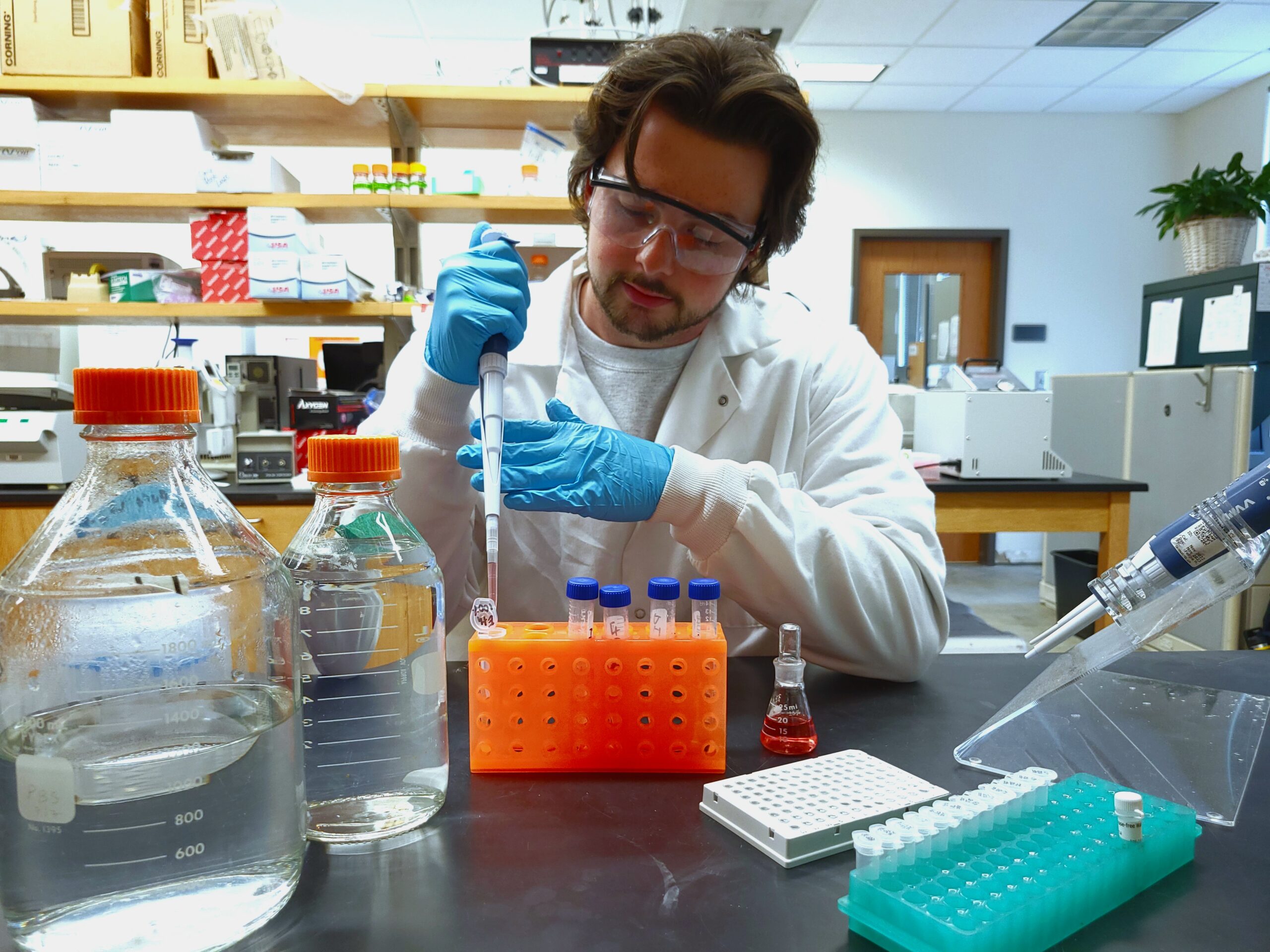
At the CCPC, we exclusively use molecular methods of virus detection, such as qPCR and high throughput sequencing (HTS). Quantitative polymerase chain reaction (qPCR) testing requires the design and optimization of primers based on known virus genome sequences, whereas HTS can reveal both known and novel viruses. Both methods are incredibly sensitive. PCR testing results can be obtained within 1-2 days, whereas data obtained from HTS can be analyzed and results generated within 2 weeks.
What do we test for?
We can test for the following pathogens by RT-qPCR:
- Apple chlorotic leaf spot virus (ACLSV)
- Apple mosaic virus (ApMV)
- Apple stem pitting virus (ASPV)
- Arabis mosaic virus (ArMV)
- Cherry green ring mottle virus (CGRMV)
- Cherry leaf roll virus (CLRV)
- Cherry mottle leaf virus (CMLV)
- Cherry rasp leaf virus (CRLV)
- Cherry rusty mottle-associated virus (CRMaV)
- Cherry virus A (CVA)
- Hop stunt viroid (HSVd)
- Little cherry virus 1 (LChV1)
- Little cherry virus 2 (LChV2)
- Nectarine stem pitting-associated virus (NSPaV)
- Nectarine virus M (NeVM)
- Peach latent mosaic viroid (PLMVd)
- Peach mosaic virus (PcMV)
- Phytoplasmas
- Plum bark necrosis stem pitting-associated virus (PBNSPaV)
- Plum pox virus (PPV)
- Prune dwarf virus (PDV)
- Prunus necrotic ringspot virus (PNRSV)
- Tobacco ringspot virus (TRSV)
- Tomato ringspot virus (ToRSV)
- Xylella fastidiosa (Xf)
How do we eliminate viruses from infected material?
Ensuring plant health and vitality is paramount. This is where the concept of clean plants comes into play.
A clean plant is one that is derived from a plant been thoroughly tested and found free of all viruses, viroids, and systemically infecting pathogens of importance. The maintenance of these plants occurs under controlled conditions designed to prevent reinfection, thus creating a robust and clean foundation for propagation and cultivation.
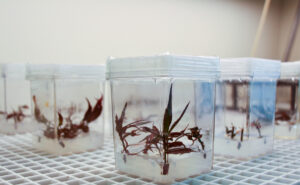
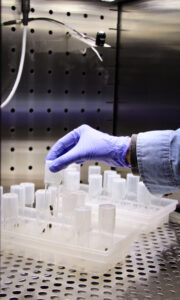
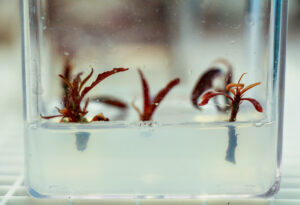
At the CCPC we employ heat therapy and meristem tip tissue culture to eliminate viruses and viroids from infected material. Following therapy, the plants are tested again for pathogens to assess whether the therapy was successful. Prior to release, the plants will each undergo HTS testing again. Every plant is therefore tested by HTS twice- once upon introduction and again before release.
The timeline for generating a clean plant can vary significantly based on several factors:
- Plants that are pathogen-negative based on initial diagnostics will progress more quickly than infected ones.
- Novel or quarantined pathogens can lead to restrictions imposed by state and federal regulatory agencies, further delaying the process.
- Some cultivars may be recalcitrant to the therapies used for virus elimination, requiring experimentation to find suitable elimination methods.
- Additionally, some pathogens are particularly resistant to standard treatments, requiring multiple approaches for successful elimination.
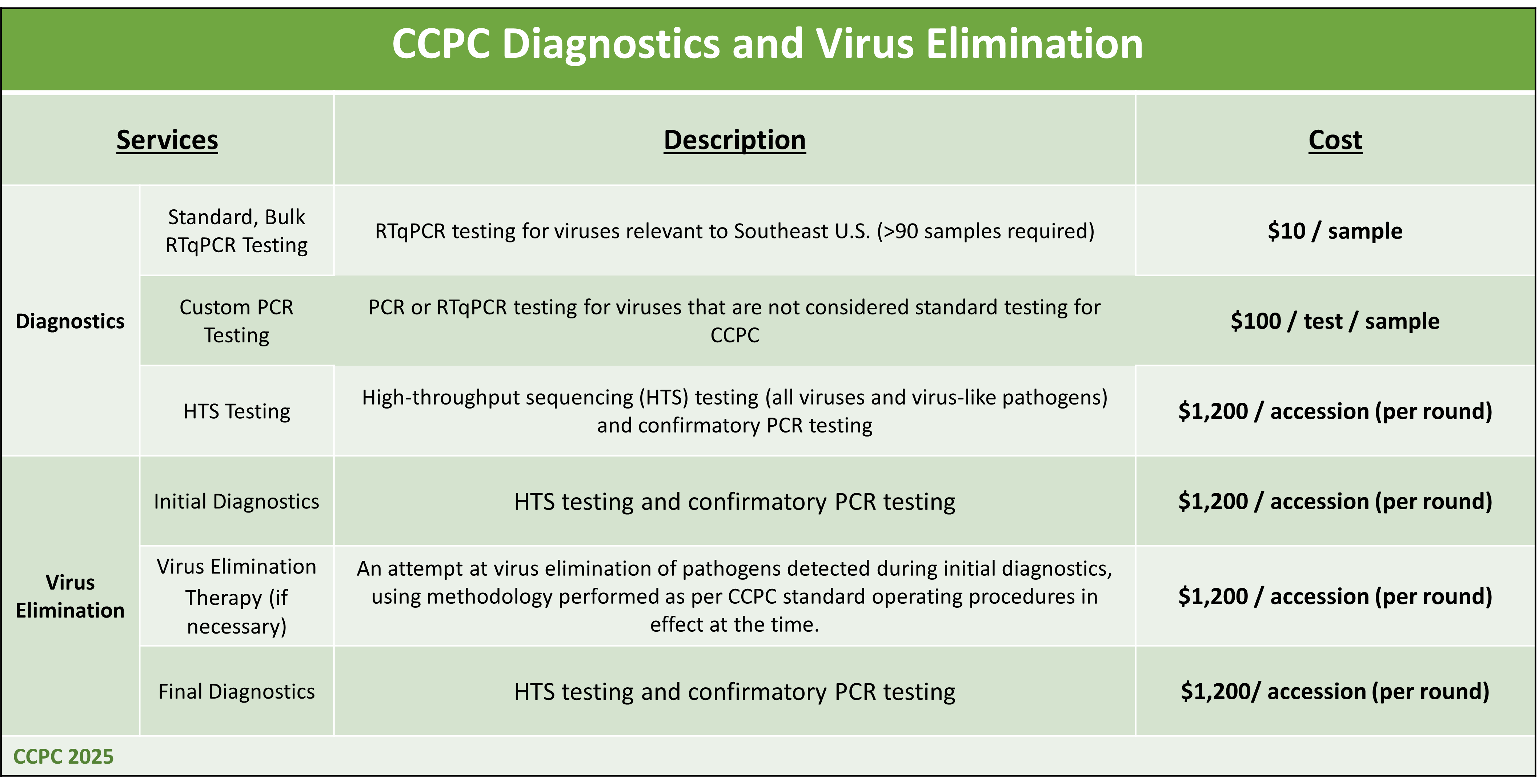
How much does it cost?
Want to know more and how to get started?
To inquire about diagnostics, virus elimination, or both, please contact ecienie@clemson.edu or (864) 656-6930.